Coming-of-age stories can be brutal critiques of parents. Speaking as someone with grown kids, I notice these things. At this point in life the young-adult tales that resonate with me have a loving parent out of sight, giving the fledgling liberty to try out their wings. And at some point along the way, the young person discovers that a parental gift or legacy anticipated a critical need. Now this isn’t to say that parents have all the answers. We clearly don’t.
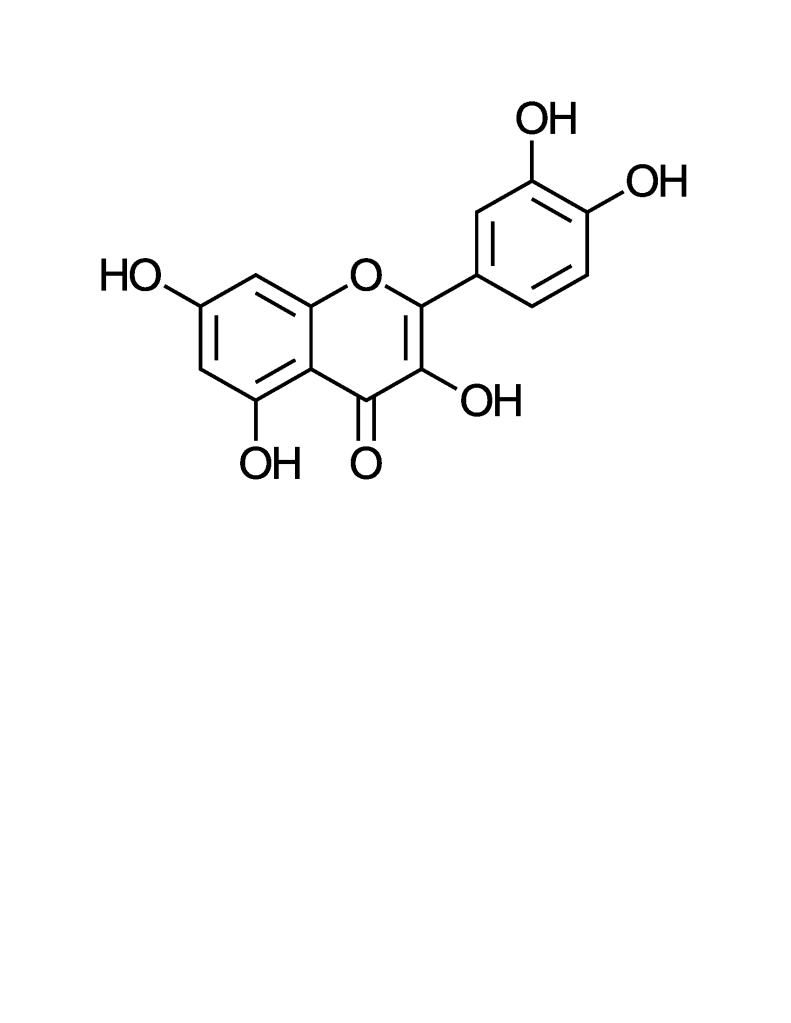
Quercetin strikes me as that kind of overlooked gift. Bear with me. It’s a bit like explaining to certain young people that those well-meaning parents aren’t as clueless as they seem sometimes.
You’ve probably heard of quercetin as a dietary supplement. It’s a ubiquitous molecular core in plant-based foods – veggies, fruits, grains, leaves – they all have it. If you take it straight the stuff is bitter, comparable to tannins, to which it is chemically related. So, it’s best to get it in a taste-masked form, such as a food, drink or capsule.
The literature is fairly busy with investigators who report on quercetin’s valuable biochemical effects, as seen in the test tube. It’s an antioxidant that quenches free radicals and reduces inflammation. Quercetin has actually terminated anaphylactic-grade peanut allergies; surprisingly but perhaps fortunately, some peanut strains have seed coats (look for the white ones) that are rich in quercetin. The compound also reduces other allergy symptoms. And it’s antibiotic. And it improves cardiovascular health. And it supports nerve health. And it activates or inhibits various proteins in a general way (including kinase enzymes, for you biochemists). And it interacts with estrogen receptors. And in the lab it has certain effects on cancer cell lines.
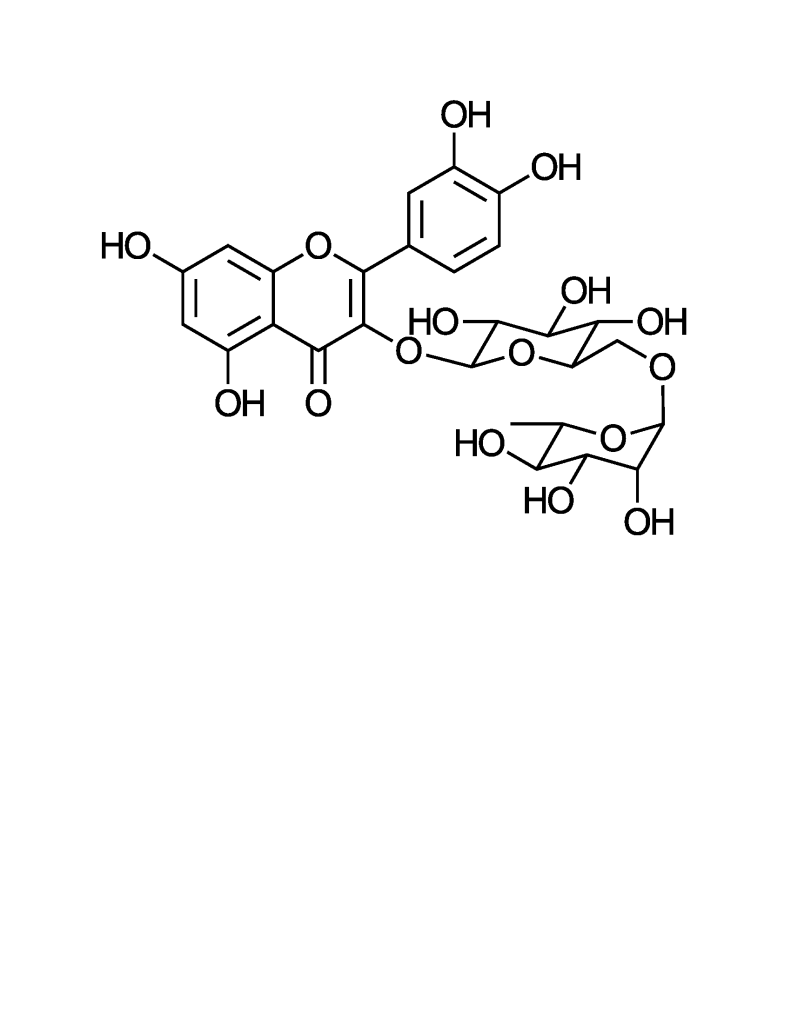
Are you impressed yet? I am, obviously. Now in the plant quercetin has sugars attached at its middle ring hydroxyl. I’d guess those appendages *might* play a role in distributing the core to various cell parts or body parts. But it would be a transient role: the sugars tend to be cleaved off during metabolism.
Be that as it may, clinical studies reveal a problem: the effects are hardly noticeable in the user. By the way, I challenge you to find a bottle label that mentions that. The reason for the disconnect is – by my best guess – quercetin’s half-life in the body, which is only an hour or two. In fact, the body modifies quercetin in a way that accelerates its ejection.
Now that bad news also happens to be good news. Think about it. When we have a constant flow of some medicine through our bodies, we’d prefer for the stuff to be medically invisible when we’re healthy, but truly potent when we’re sick. And that’s seemingly how it works here. When the body becomes inefficient at ejecting metabolites and other waste, quercetin comes into its own. Its dwell time must necessarily go up, so its medicinal benefits are suddenly available in full force. Plus, so many foods can keep adding it into the system.
Bottom line: Quercetin is like the extra car key that a parent slipped into your pocket or handbag when you weren’t looking, in case you got locked out and in danger. To me, that’s cool.
Food for Thought
Y. Li et al., “Quercetin, Inflammation and Immunity,” Nutrients, 8:167, p. 1-14 (2016), posted at:
https://www.ncbi.nlm.nih.gov/pmc/articles/PMC4808895/pdf/nutrients-08-00167.pdf
 Circling-V ™