It’s surprising how often food polarizes us. Fats were bad until they were good. Then we could tolerate certain fats in a Mediterranean diet. Then weight lifters on a paleo diet avoided them. But ketogenic thinkers Atkins and now Fung argued that fats are good, whether from plants or animals. So carbs are evil instead, right? Or not? The ketogenic South Beach diet tells users to discover their best carbs, or so says a friend who lost a lot of weight by it.
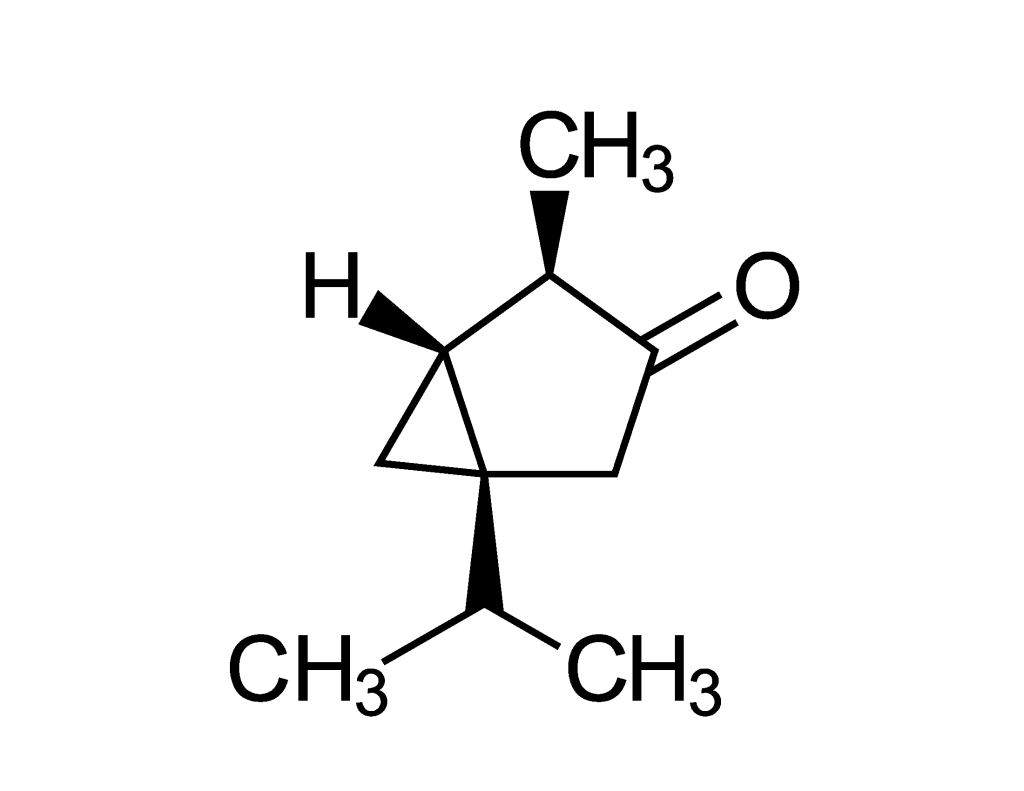
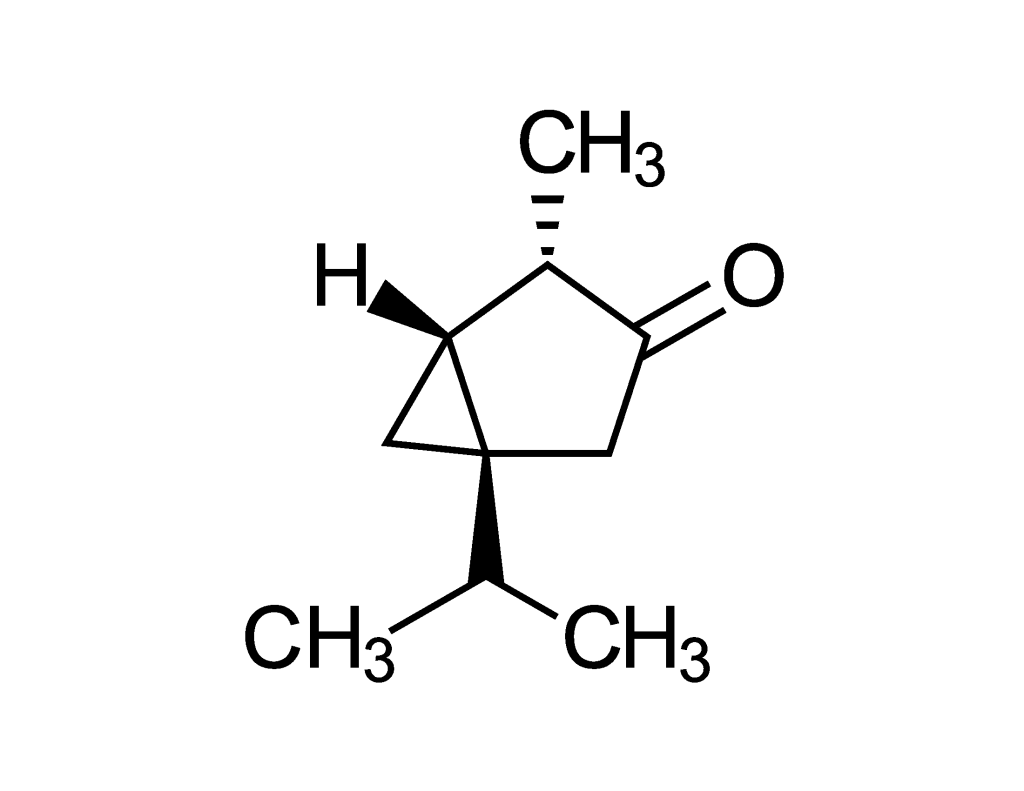
Thujone has been equally polarizing. Here’s the background. Thujone is a monoterpene that tastes like menthol / licorice. It got its name from cedar / arbor-vitae oil (Thuja occidentalis L.), but it’s more widespread. In modern times thujone was an accused hallucinogen in absinthe, which needs its own explanation. Absinthe was the favorite bar drink of old icons such as Vincent van Gogh; it was made from biblically bitter wormwood Artemisia absinthium L. In our day the stuff also drew criticism because 2-4 grams of thujone would be fatal to most people. Science backed off in ~2006 upon finding that the mean historical thujone content was only ~33 mg/L (< 0.04% w/w, or <40 ppm), less significant than absinthe’s 90- to 148-proof alcohol. If drinkers saw imaginary things, it’s because they were soused. The irony is that – projecting from studies in mice – drinking two pints of ethanol should reduce thujone’s toxicity by half.
Now thujone is being investigated as hero instead of villain, for teas made from the spice sage (Salvia officinalis L.). The Latin name Salvia alludes to use as a cure. Clinical studies are still rare for pure thujone, but thujone-containing plant extracts are antiviral, and they stimulate production and activation of immune cells (e.g., macrophages), and treat respiratory tract infections. Thujone also has anti-vomiting / anti-nausea effects; more technically, it’s a 5-HT3 antagonist. Folk medicine uses thujone-containing extracts against scurvy (with effect), cystitis, rheumatism, and cancer. The terpene also crosses the blood-brain barrier, unlike many drugs. Recently α-thujone was a magic bullet: it induced cell suicide in tumors but left normal cells largely unscathed. Specifically, it killed glioblastoma multiforme but not astrocytes.
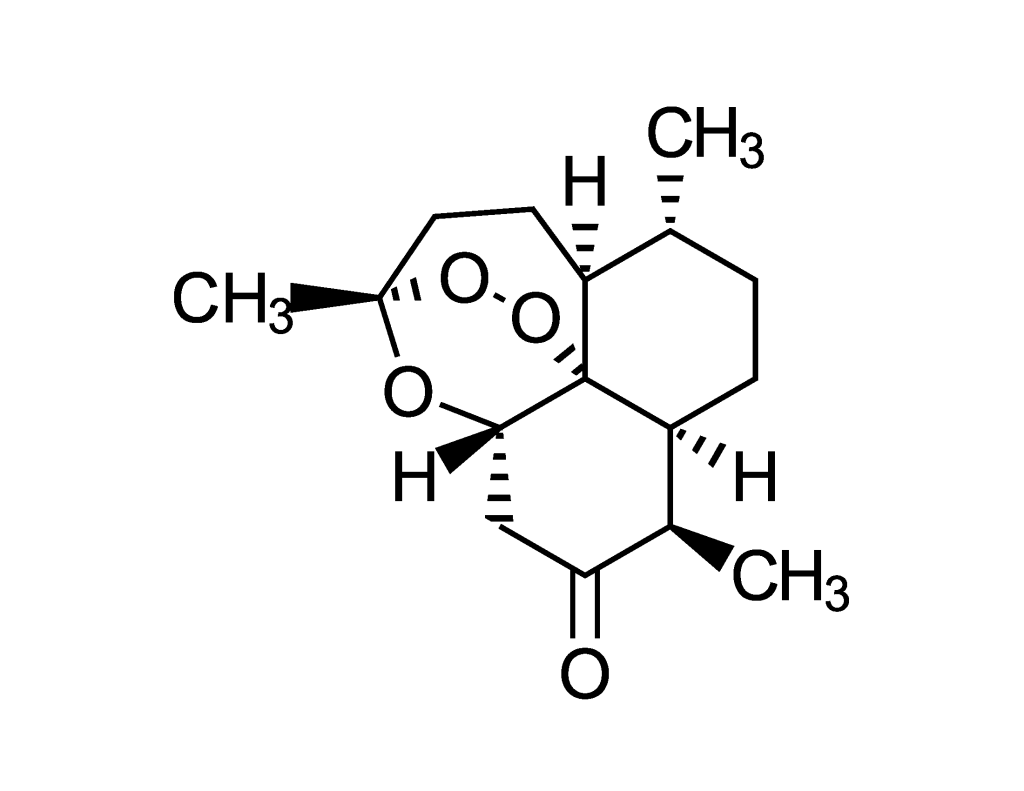
In a nice twist, thujone may double up against the baddies. Artemisinin, which is another wormwood compound, kills iron-rich cells selectively, including both cancer and malaria cells.
That brings us to molecular details. Ordinary sage tea has ~4.4 mg/L thujone (and up to four times that much camphor), which is much less than in absinthe and avoids alcohol side effects. Thujone has four forms: (+)-α-; (–)-α-; (+)-β-; and (–)-β-. As of 2016 we know that even the uncommon (+)-α- and (–)-β- forms exist in nature, in the sage plant. Alpha is more potent and usually more prevalent: 85:15 for (–)-α- : (+)-β-, though a 2:1 ratio is common; the beta form may dominate elsewhere (e.g., Acantholippia salsoloides Griseb., Verbenaceae).
Other thujonic species include oregano, mint (Mentha) species, tansy, mugwort, Nootka cypress, and some junipers. If you’re wondering what thujone does for its host plants, it repels insects. So, though you may avoid synthetic agricultural chemicals on your food, you’re probably eating the natural parallels anyway. And the natural variety isn’t necessarily less toxic. How’s that for ambivalence?
Food for Thought
Stephan G. Walch et al., “Determination of the biologically active flavour substances thujone and camphor in foods and medicines containing sage (Salvia officinalis L.),” Chemistry Central Journal, 5:44 (2011) p. 1-10, posted at https://www.ncbi.nlm.nih.gov/pmc/articles/PMC3155476/pdf/1752-153X-5-44.pdf
 Circling-V ™